Why MT4 still dominates forex trading across the Middle East
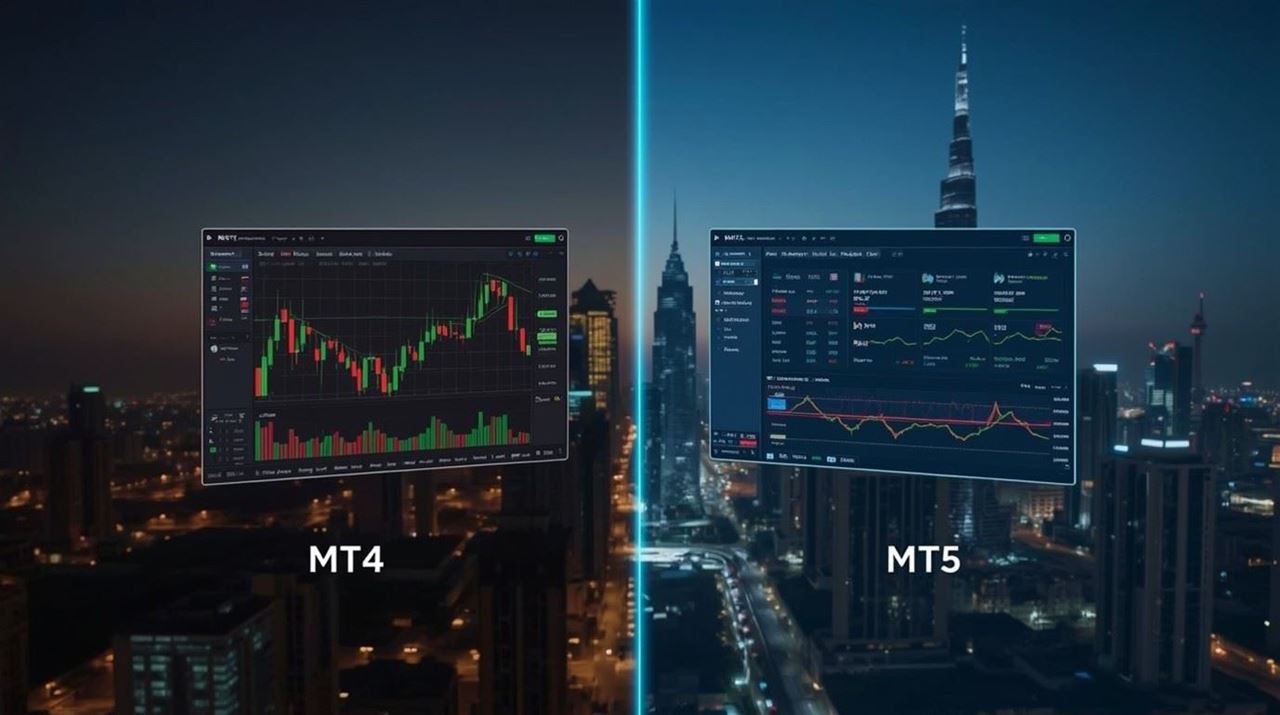
The platform war nobody expected MT4 to win
It was supposed to be a smooth handover. MetaQuotes launched MT5 back in 2010 – faster, smarter, built for the future. Brokers pushed it. Marketing budgets followed. And yet, walk into any trading community in Dubai, Riyadh, or Cairo in 2026, and the conversation keeps circling back to the same four letters: MT4.
Why? That's the real question worth unpacking.
Forex trading across the MENA region has exploded over the past decade. Saudi Arabia alone saw retail trading volumes jump by over 34% between 2022 and 2025, according to data aggregated by regional fintech analysts. Egypt, Kuwait, and the UAE aren't far behind. More traders entered the market – and most of them landed on MT4.
What actually separates these two platforms
Before getting into preferences, it helps to define the tools themselves.
MT4 (MetaTrader 4) – released in 2005 – is a desktop-based forex trading platform built specifically around currency pairs, CFDs, and retail broker infrastructure. It's lean, stable, and runs smoothly even on modest hardware.
MT5 (MetaTrader 5) – the 2010 successor – expanded into stocks, futures, and commodities. It added more timeframes, a built-in economic calendar, and deeper backtesting capabilities. On paper, it's the superior product.
On paper.
The gap between specs and actual daily use is where things get interesting – especially in Gulf markets, where trader habits, broker ecosystems, and technical infrastructure all shape platform loyalty in ways a spec sheet can't capture.
Here's how the two compare across the dimensions that actually matter:
● Asset coverage: MT5 supports stocks and futures; MT4 focuses on forex and CFDs
● Indicators: MT4 offers 30 built-in indicators; MT5 has 38 – but MT4's library of custom indicators is vastly larger
● Expert Advisors (EAs): MT4's MQL4 language has a decade-plus head start; thousands of free EAs exist for it
● Hedging: MT4 allows full position hedging – critical for many MENA trading strategies; MT5 originally restricted this (though partially addressed later)
● Community support: MT4 forums, Arabic tutorials, and local broker guides dwarf MT5 equivalents in the region
The MT4 ecosystem advantage in Gulf markets
Here's something the platform comparison articles usually skip: ecosystem lock-in is real, and it runs deep.
A trader in Kuwait who spent three years building a custom Expert Advisor on MT4 isn't migrating to MT5 on a whim – that code doesn't transfer cleanly. MQL4 and MQL5 are different languages. Rewriting an EA isn't an afternoon project.
The same logic applies to signal providers, copy-trading setups, and broker-side infrastructure. Many regional brokers serving Arabic-speaking clients – particularly those offering Islamic (swap-free) accounts – built their entire back-end around MT4. Switching costs for brokers aren't trivial either.
As Dr. Youssef Al-Rashidi, a fintech researcher based in Dubai, noted in a 2024 industry brief: "The MT4 infrastructure across MENA brokers represents years of localization work – Arabic interfaces, local payment integrations, regulatory compliance layers. MT5 migration isn't just a software update."
For traders who want a stable, desktop trading platform with deep regional support and a mature ecosystem, MT4 remains the rational – not just nostalgic – choice in 2026.
When MT5 genuinely makes more sense
That said, MT5 isn't a worse platform – it's a different one. And for certain trader profiles in the region, it's the smarter pick.
Diversified investors who want exposure beyond forex – Gulf equities, commodity CFDs, global indices – benefit from MT5's broader asset universe. A trader splitting attention between Dubai Gold & Commodities Exchange instruments and EUR/USD pairs has more native flexibility on MT5.
Algorithmic traders starting fresh also have a reasonable case. If someone is building their first EA from scratch in 2026, learning MQL5 isn't a disadvantage – it's the more future-proof skill. MetaQuotes has signaled (repeatedly, though quietly) that MT4's long-term development is winding down.
Institutional-leaning retail traders appreciate MT5's netting account structure, which aligns better with professional trading conventions used in formal financial environments – something increasingly relevant as GCC regulators push retail brokers toward tighter compliance standards.
So the honest answer isn't "MT4 is better." It's: MT4 is better for most of what most MENA retail traders actually do, right now.
Final thoughts
Platform debates in trading communities tend to generate more heat than light – everyone's got a preference, and most people defend it like it's a football club. But the numbers and the behavior tell a clearer story.
MT4's staying power across the Middle East isn't stubbornness or inertia. It reflects a genuine fit between the platform's design – forex-first, EA-friendly, stable, widely supported in Arabic – and the actual trading patterns of the region's retail market. MT5 will likely gain ground as the next generation of traders builds habits on it rather than migrating to it. That shift is happening, just slowly.
For traders evaluating platforms today, the practical advice is simple: if forex and CFDs are the focus, and especially if working with a regional broker whose infrastructure runs on MT4, there's no compelling reason to chase MT5. And if the goal eventually includes stocks, futures, or building new algorithmic systems from scratch – MT5 is worth the learning curve.
Either way, knowing what each platform actually does (rather than what the marketing says) is the only edge that really matters at the starting line.